Every procurement team knows the feeling. A purchase order is open, the delivery date is slipping, and the supplier has not replied to the last two emails. Someone on your team now spends the afternoon chasing a status update.
Multiply that by hundreds of suppliers and thousands of open orders. Follow-ups quietly consume the hours your buyers should spend on negotiation, sourcing strategy, and risk management.
AI agents offer a way out. They can send reminders, read replies, update records, and flag problems without a human typing every message. But procurement leaders have a fair worry: “If software talks to my suppliers, who is in control?”
The answer is that you stay in control, if you design the system well. Here is how.
The Short Answer (For Busy Readers)
AI agents can handle routine supplier follow-ups end to end. They work within rules you define, pull facts only from your approved systems, and hand decisions to people when the stakes rise. Done right, you gain speed and consistency while keeping approvals, audit trails, and accountability firmly with your team.
The Real Cost of Manual Supplier Follow-Ups
Chasing suppliers looks like small work. In practice, it creates big problems:
- Lost time. Buyers copy data between inboxes, spreadsheets, and the ERP.
- Late detection. A delay found after the due date leaves no room to react.
- Inconsistent communication. Each buyer follows up in a different style and at different intervals.
- Poor visibility. Updates live in personal inboxes instead of a shared record.
- Burnout. Skilled people spend days on repetitive tasks.
Think of manual follow-up as a leaking tap. Each drip seems harmless. Over a quarter, the waste adds up to a flooded floor.
What Is an AI Agent in Procurement?
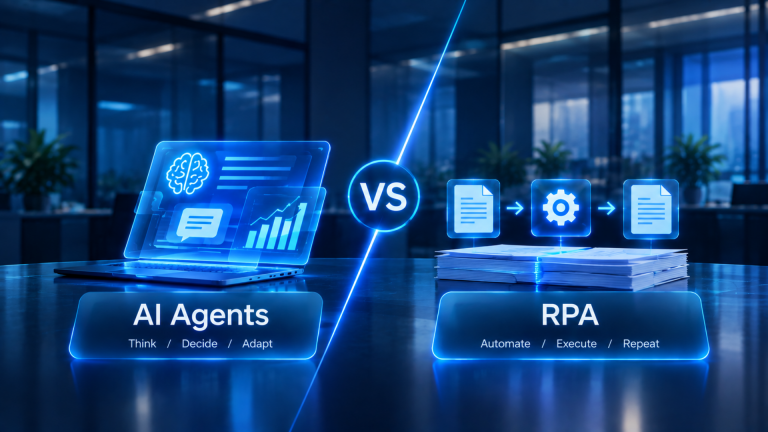
A chatbot answers questions. An AI agent takes action toward a goal.
Give an agent a goal such as “make sure every open PO due in the next 10 days has a confirmed delivery date,” and it can plan the steps, use tools, and complete the work. In a procurement setting, an agent can:
- Read open purchase orders from your ERP.
- Spot orders without confirmation or approaching a due date.
- Draft and send a polite, specific message to the supplier.
- Read the reply, even when it arrives as free text or a PDF.
- Update the system with the new date or quantity.
- Escalate to a buyer when something looks wrong.
Picture a very organised assistant who never forgets a follow-up, never gets tired, and always writes in your company’s tone.
Where AI Agents Add the Most Value
Not every task suits automation. Start where the work is repetitive, rule-based, and low risk.
- Order acknowledgements. Confirm that suppliers received and accepted each PO.
- Delivery date confirmations. Ask for updated dates on orders nearing their due date.
- Shipment status checks. Request tracking details and record them.
- Document collection. Chase invoices, certificates, compliance papers, and quality reports.
- Price and quote reminders. Nudge suppliers who have not responded to a request for quotation.
- Overdue payment queries. Handle simple supplier questions about invoice status.
Each of these tasks follows a clear pattern. Agents handle patterns very well.
The Control Question: How to Keep Humans in Charge
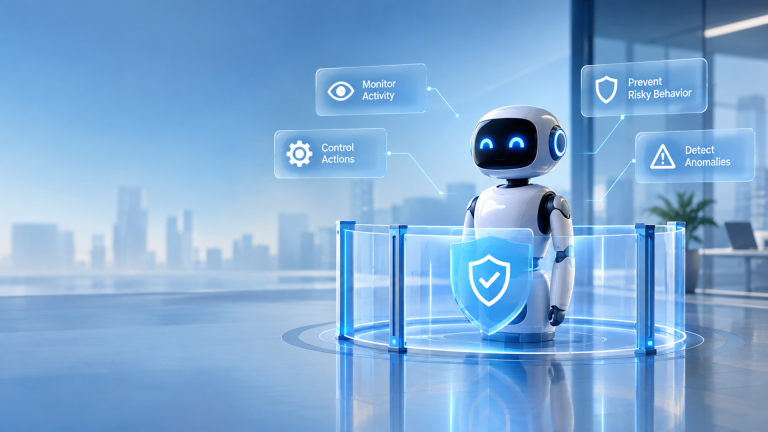
Automation without control is a risk. Control without automation is a bottleneck. The goal is to get both. Five design principles make it work.
1. Define clear boundaries
Tell the agent exactly what it may and may not do. For example, it can send reminders and record confirmed dates. It cannot change prices, alter payment terms, or cancel an order.
Treat the agent like a new team member with a written job description. Narrow permissions at the start, and widen them as trust grows.
2. Ground every answer in approved data
Accuracy depends on what the agent reads. Connect it to your ERP, supplier master, and contract records, and instruct it to quote only from those sources.
When the data is missing or unclear, the agent should say so and ask a human. A confident wrong answer does more damage than a short pause.
3. Place approval checkpoints where risk is highest
Not every message needs a human review. Match oversight to impact:
- Low risk (routine reminders): the agent acts alone and logs the action.
- Medium risk (a date change affecting production): the agent proposes, and a buyer approves.
- High risk (price disputes, quality failures, contract issues): the agent stops and escalates immediately.
Good checkpoints work like traffic lights. Green lets routine work flow. Amber slows it for a quick review. Red stops it until a person decides.
4. Keep a complete audit trail
Every message sent, every reply read, and every record changed should be logged with a timestamp and a reason. Auditors, managers, and buyers should be able to replay what happened and why.
An audit trail also builds internal confidence. Teams trust automation faster when they can see exactly what it did.
5. Monitor performance continuously
Track a few simple measures:
- Response rate from suppliers
- Time saved per buyer
- Percentage of messages needing human correction
- Number of escalations and their causes
- On-time delivery trends
If the correction rate climbs, adjust the instructions or data. Treat the agent as a living process, not a one-time installation.
A Practical Example
Imagine a manufacturer with 400 active suppliers and about 1,500 open purchase orders at any time.
Before automation, three buyers spend much of their week sending reminders and updating spreadsheets. Late shipments often surface only when the production line runs short.
After deploying an AI agent with clear guardrails:
- The agent reviews open orders every morning.
- It messages suppliers whose orders are due within a set window and have no confirmed date.
- It reads replies, updates the ERP, and flags any date that threatens a production schedule.
- A buyer reviews only the flagged exceptions, usually a small fraction of the total.
The buyers now spend their time on negotiation and supplier development. Problems surface early, and the team still approves everything that matters. (Figures here are illustrative. Your results will depend on your data, processes, and supplier base.)
Common Pitfalls to Avoid
Even strong projects stumble on a few predictable issues.
- Poor data quality. Duplicate suppliers, outdated emails, and missing fields confuse any agent. Clean data first.
- Too much autonomy, too soon. Start with low-risk tasks and expand gradually.
- No ownership. Name a person responsible for the agent’s rules and performance.
- Ignoring supplier experience. Messages should feel professional, clear, and respectful. Let suppliers know how to reach a human.
- Weak security. Agents touch sensitive commercial data. Apply role-based access, encryption, and strict system permissions.
- Skipping change management. Buyers need to understand the agent’s role. Position it as a helper, not a replacement.
A Simple Roadmap to Get Started
You do not need a massive transformation program. A phased approach works well.
Step 1: Pick one use case. Choose a frequent, low-risk task such as delivery date confirmations.
Step 2: Prepare your data. Check supplier contacts, PO records, and system access.
Step 3: Set the rules. Write the agent’s permissions, tone, escalation triggers, and approval points.
Step 4: Pilot with a small group. Run the agent with a handful of suppliers and one buyer team. Review every action in the first weeks.
Step 5: Measure and refine. Compare time saved, accuracy, and supplier response against your baseline.
Step 6: Scale carefully. Add suppliers, categories, and tasks as confidence grows.
Why Integration Matters as Much as Intelligence
An AI agent is only as useful as the systems it connects to. If it cannot read your ERP or write updates back, a person still has to bridge the gap, and the value shrinks.
Reliable agents need:
- Secure connections to ERP, procurement, and email systems
- Well-structured, trustworthy data
- Role-based access and monitoring
- Stable infrastructure that handles growing volumes
Many procurement teams run on SAP or Oracle environments built over many years. Connecting AI to those core systems takes real technical skill. Skipping it leads to fragile pilots that never reach production.
How EDCS Can Help
Expora Database Consulting Services Pvt. Ltd. is a Bengaluru-based IT consulting and staffing company. Our team brings experience in consulting, solution services, and architecture design, and we have supported clients across consulting, manufacturing, mining, government, export, and product development for over a decade.
AI agents in procurement sit on top of enterprise systems, databases, and infrastructure. Those foundations are where EDCS works every day. Here is how we can support your journey:
- Enterprise application expertise. Our SAP and Oracle EBS services help connect AI workflows with the ERP data your procurement process depends on.
- Database and infrastructure strength. Our Oracle database administration and infrastructure support keep your data accurate, secure, and available, so agents work from a trusted source.
- Integration and process design. We help define where agents act, where approvals sit, and how audit trails are captured.
- Skilled talent. Our IT and non-IT staffing services can supply the specialists you need to build, run, and monitor automated workflows.
- Customer-centric delivery. We apply global standard methodologies to improve efficiency and reduce operational costs, with a focus on practical outcomes.
Whether you want to run a first pilot or strengthen the systems underneath an existing one, EDCS can help you move forward with confidence and control.
Key Takeaways
- AI agents can automate routine supplier follow-ups, from delivery confirmations to document requests.
- Control comes from design: clear boundaries, approved data sources, risk-based checkpoints, audit trails, and ongoing monitoring.
- Start small, prove value, and expand as trust builds.
- Strong data and system integration decide whether an agent succeeds or stalls.
- Your buyers stay in charge, and spend their time where human judgment matters most.
Ready to Automate Supplier Follow-Ups the Smart Way?
Talk to the EDCS team about building a controlled, secure, and practical AI-driven procurement workflow for your business.
Visit www.edcs.co.in to book a consultation and take the first step toward faster, smarter procurement.